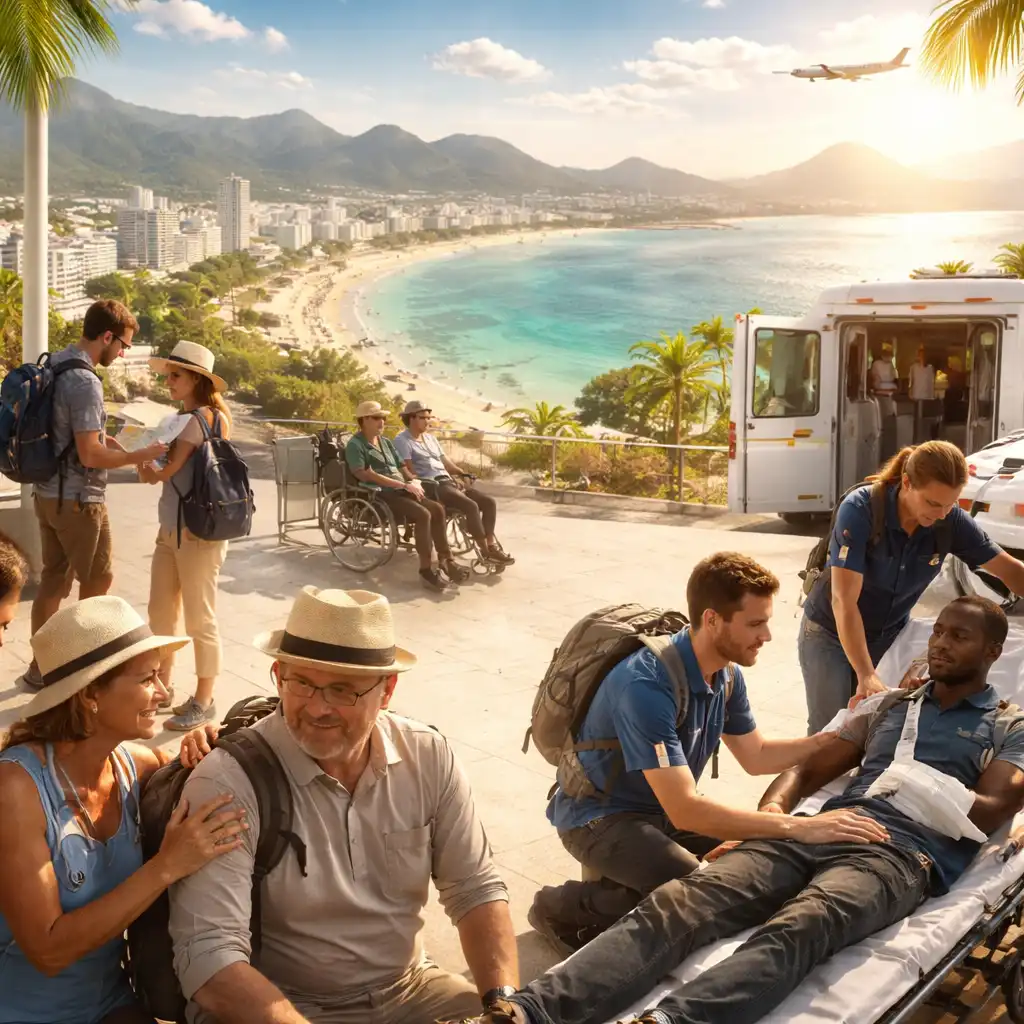
Essential Medical Assistance Services for Safe Travel in 2026
As US travellers return to long-haul trips and complex itineraries, essential medical assistance services are becoming a quiet but critical safety net. Within a few hours of leaving home, your familiar healthcare system, insurance rules, and hospital network effectively disappear. Many Americans assume they can improvise in a crisis overseas, only to discover that language barriers, different standards of care, and limited emergency medical services can quickly turn a minor incident into a major ordeal.
The biggest health risk for many travellers in 2026 isn’t a rare disease or headline-grabbing outbreak; it’s assuming their existing coverage and plans will work the same way abroad as they do at home.
Rising health risks in global travel
Global mobility has rebounded faster than many health systems have adapted, and travellers are encountering a more fragmented care environment. Heatwaves, wildfire smoke, and extreme weather are combining with evolving infectious diseases to increase the chance that you’ll need urgent care access while traveling. In popular destinations, hospitals can be overwhelmed, while rural or adventure locations may have only basic clinics and limited transport options.
Why essential medical assistance services matter
Most US health plans offer little or no protection once you cross a border, especially for evacuation or specialist treatment. A serious injury that requires air ambulance transport can easily exceed six figures, and many standard policies simply don’t cover it. Without coordinated healthcare support solutions, families can face impossible choices between inadequate local treatment and financially devastating evacuation. This gap is particularly stark for retirees, families with young children, and travellers with chronic conditions.
Common gaps, misconceptions, and warning signs
Many people buy basic trip-cancellation cover and assume they’re fully protected, never checking whether patient care assistance, translation, or hospital coordination is included. Others rely on credit card perks that quietly cap benefits at levels far below real-world costs in private hospitals. Warning signs you are underprotected include not knowing the nearest quality facility, travelling with older relatives without coordinated medical support for seniors, or assuming a quick search will deliver 24 7 emergency medical help abroad when you need it most.
- You don’t know if your policy covers international medical response services or evacuation.
- You have pre-existing conditions but no written plan for on-call travel health assistance.
- You’re visiting regions with limited hospitals yet rely on ad hoc local clinics for care.
- Your cover mentions emergency medical services but excludes private or out-of-network facilities.
- You assume apps and public Wi-Fi can replace travel-focused patient care coordination in a crisis.
Digital tools such as telehealth, remote patient monitoring during travel, and global healthcare support for travelers are reshaping what’s possible, but access is usually tied to specific plans. When these services are missing, delays, misdiagnosis, and fragmented records become more likely, especially across multiple countries. Before your next trip, review whether your arrangements provide genuine on-the-ground support, not just reimbursement after the fact. Consider whether your family would know who to call for on-call guidance if you were unconscious or unable to advocate for yourself.
If any of these gaps sound uncomfortably familiar, now is the time to review your coverage, not from an airport lounge. Speak with a specialist who understands international medical response services, cross-border hospital networks, and the realities of 24 7 emergency medical help abroad. A brief consultation can highlight hidden exclusions, suggest practical safeguards, and help you build a plan so that if something does go wrong, you have clear, coordinated medical support instead of scrambling for answers in a foreign waiting room.